
Hellar Cardiomyotomy For Achalasia Cardia In Sulaymaniyah, Clinical Outcomes And Patient Satisfaction
DOI:
https://doi.org/10.71305/ijhsp.v2i1.1558Keywords:
Achalasia Cardia, Heller Cardiomyotomy, Laparoscopic Heller Myotomy, Dor Fundoplication, Eckardt Score, Esophageal Motility Disorder, Surgical Outcomes, High-Resolution ManometryAbstract
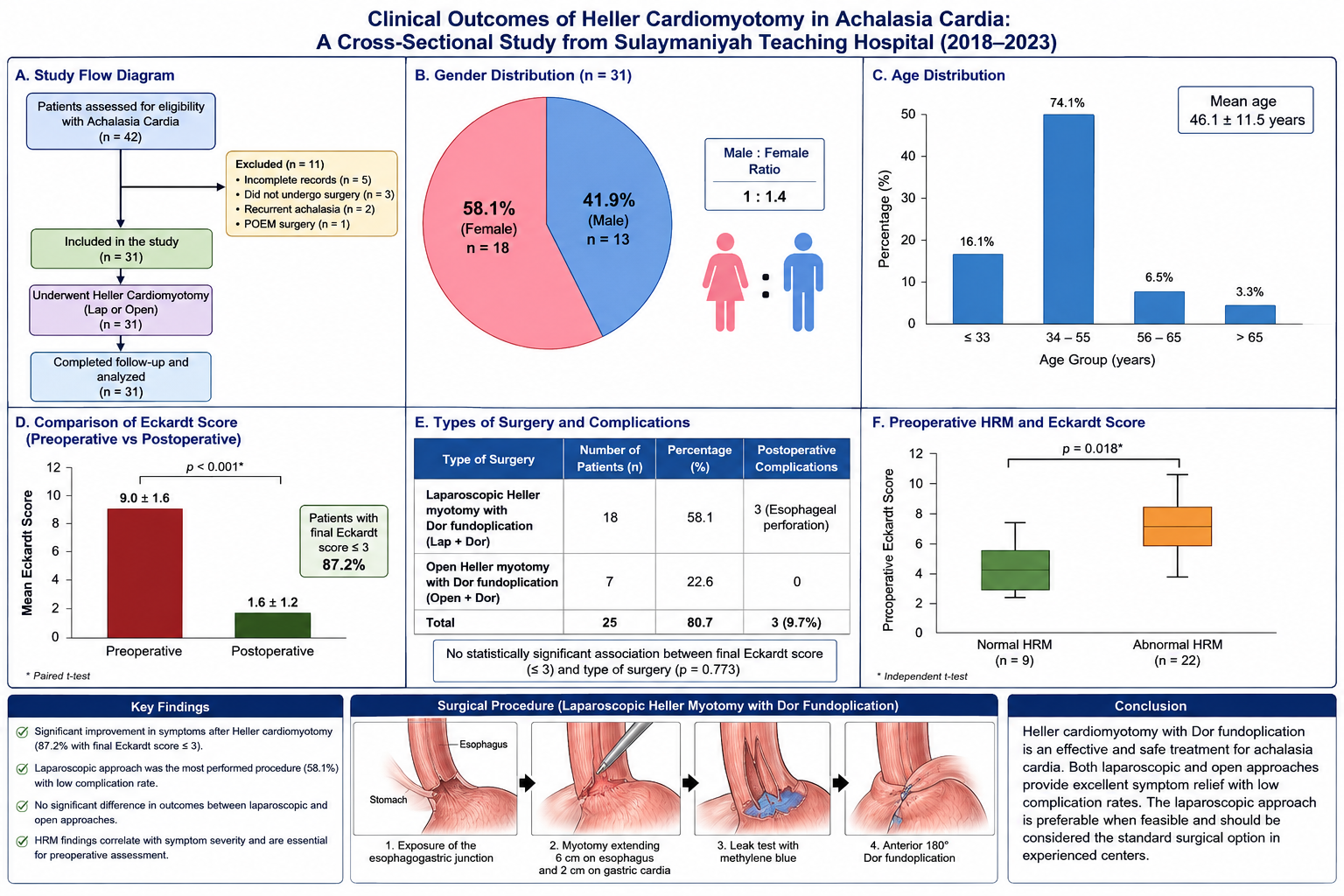
Achalasia cardia (AC) is a rare esophageal motility disorder characterized by impaired esophageal peristalsis and failure of lower esophageal sphincter (LES) relaxation, resulting in progressive dysphagia, regurgitation, weight loss, and reduced quality of life. This study aimed to evaluate the clinical outcomes of Heller cardiomyotomy in patients with achalasia cardia treated at the Gastrointestinal Tract Surgery Department of Sulaymaniyah Teaching Hospital between November 2018 and December 2023. A cross-sectional study was conducted among patients with primary achalasia who underwent Heller cardiomyotomy, while patients with incomplete records, recurrent disease, or previous peroral endoscopic myotomy (POEM) were excluded. Preoperative assessment included demographic characteristics, medical history, upper gastrointestinal endoscopy, barium swallow, high-resolution manometry, and Eckardt score evaluation. Patients underwent either laparoscopic or open Heller myotomy according to clinical feasibility and patient preference, followed by regular postoperative follow-up. Data were analyzed using descriptive and inferential statistical methods. The mean patient age was 46.1 ± 11.5 years, with 74.1% aged 34–55 years, and females represented 58.1% of the study population (male-to-female ratio 1:1.4). Following surgery, 87.2% of patients achieved a final Eckardt score of ≤3, indicating significant symptomatic improvement. Laparoscopic Heller myotomy with Dor fundoplication was performed in 58.1% of patients and resulted in three minor postoperative complications, whereas open Heller myotomy with Dor fundoplication was performed in 22.6% of patients without postoperative complications. No statistically significant association was observed between the surgical approach and postoperative Eckardt scores. In conclusion, Heller cardiomyotomy is an effective and safe treatment for achalasia cardia, providing substantial symptom relief and low postoperative morbidity. Although both laparoscopic and open approaches demonstrated favorable outcomes, the laparoscopic approach appears to be the preferred surgical option because of its widespread use and excellent clinical results.
Downloads
Published
How to Cite
Issue
Section
License
Copyright (c) 2026 International Journal of Health Systems and Policy

This work is licensed under a Creative Commons Attribution 4.0 International License.



 Contact


